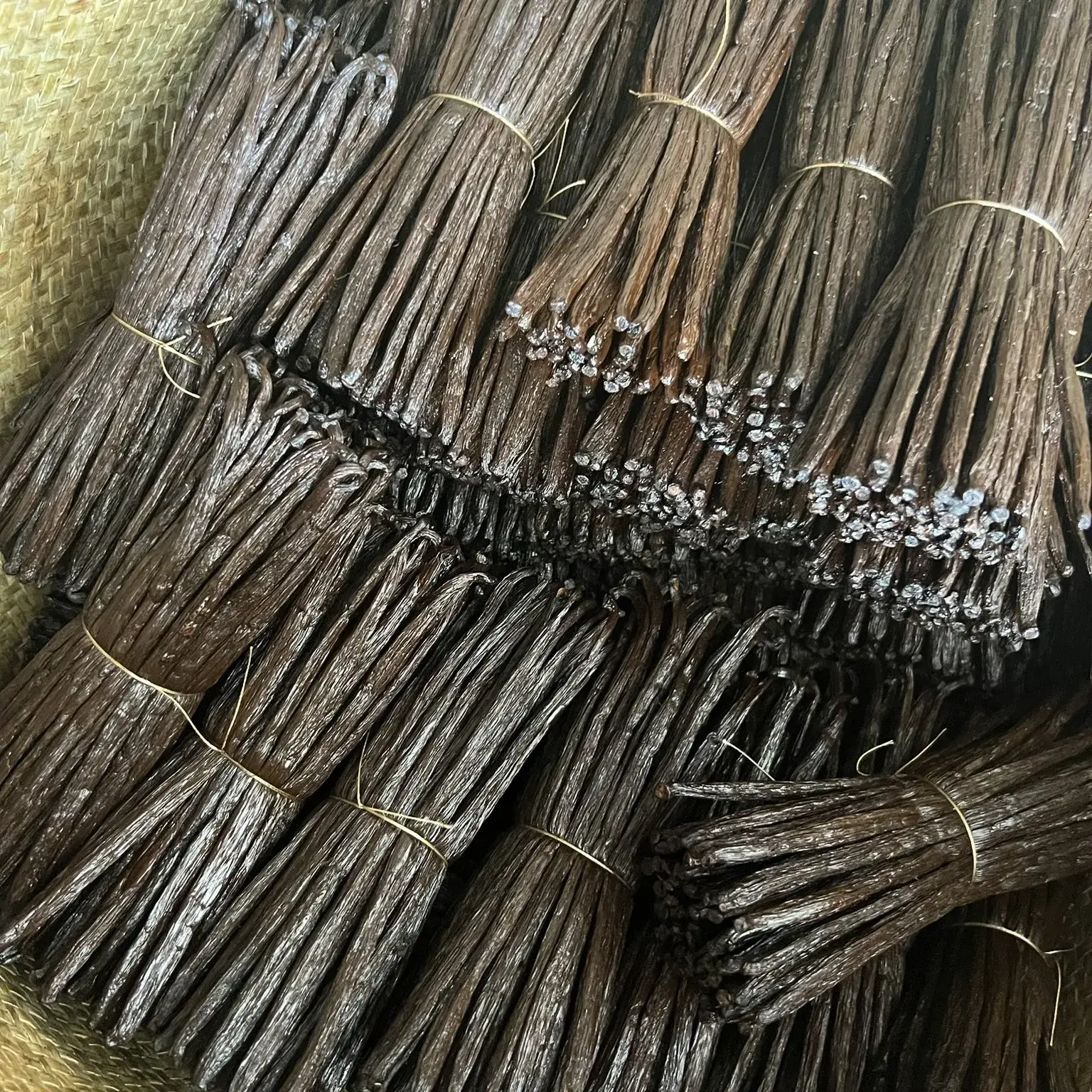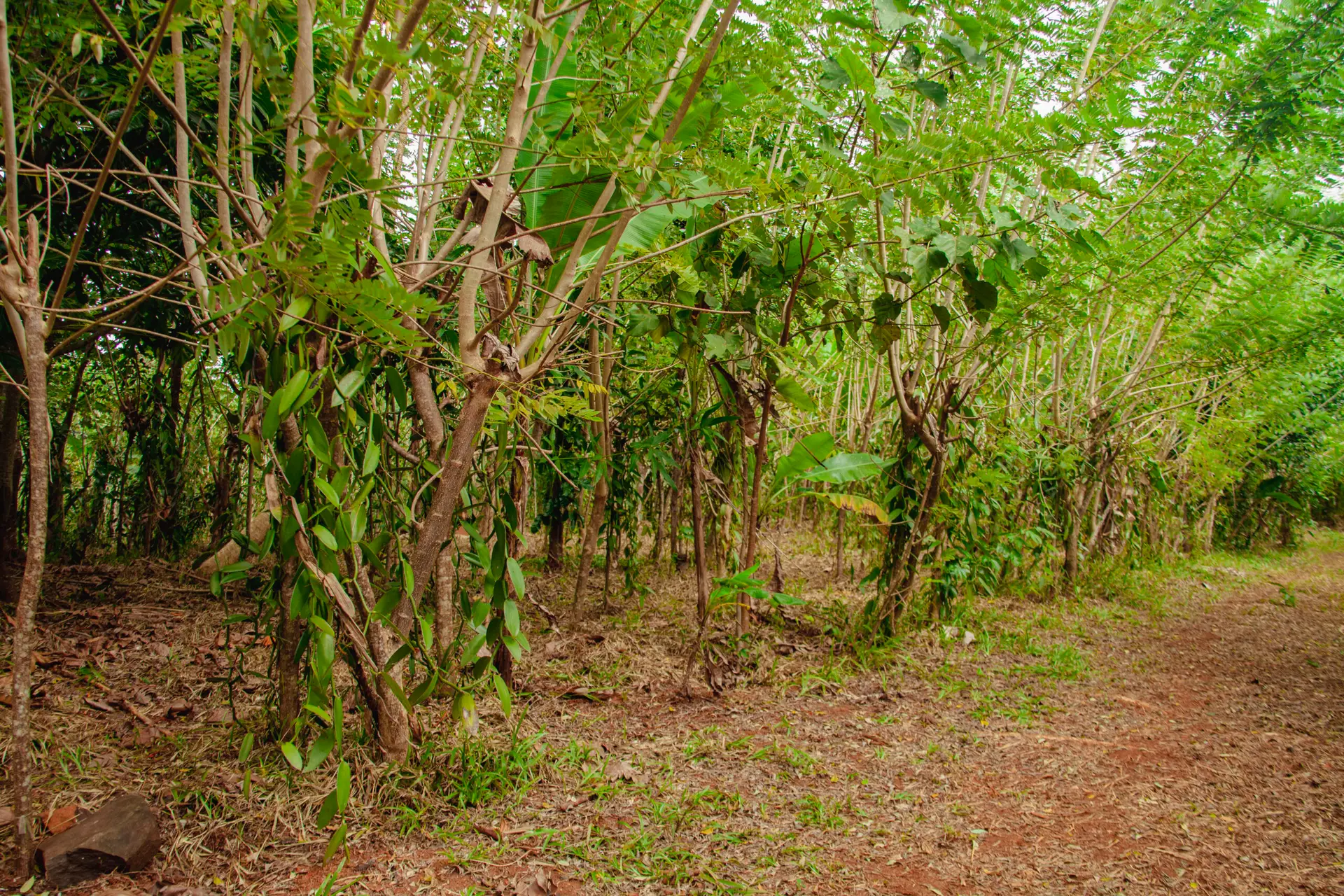

In Madagascar’s vanilla-growing regions, images sometimes speak louder than numbers.
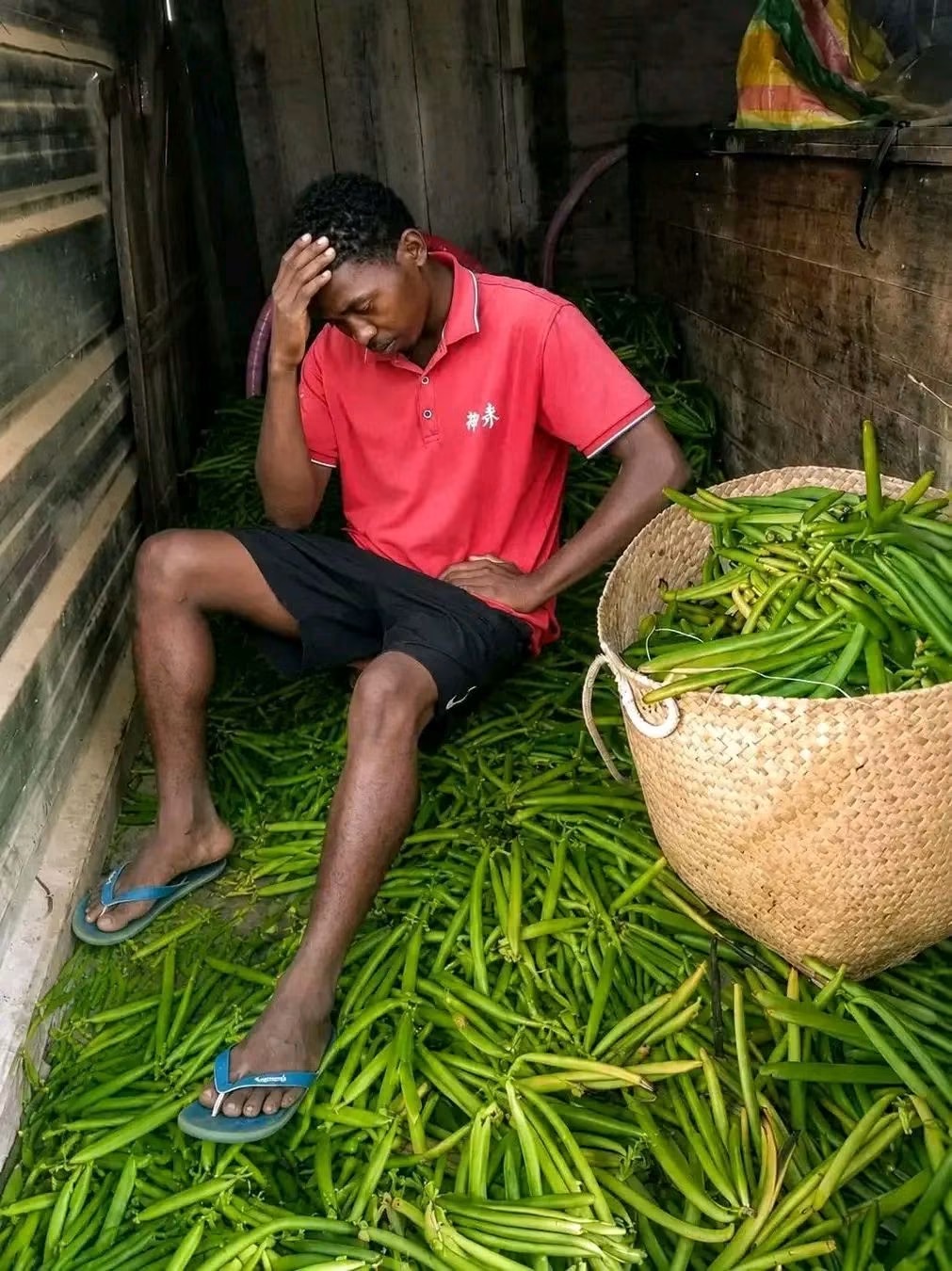
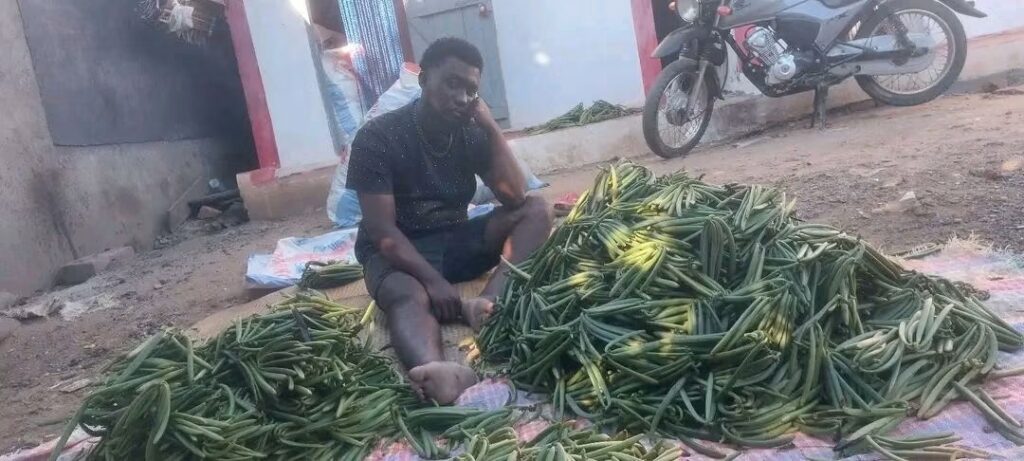
A farmer sits surrounded by his harvest. Baskets are filled with green vanilla beans. Yet there is no smile. Instead, there is worry, exhaustion and one painful question:
How can a crop that requires almost a full year of work lose so much value when the time finally comes to sell it?
During the 2026 season, low green vanilla prices in Madagascar are causing deep concern among many farmers.
Vanilla is not a crop planted today and harvested a few weeks later. Behind every bean are months of work, constant attention and uncertainty.
The current situation is therefore about more than price.
It is about people, families and the future of an entire industry.
A full year of work behind a few kilos of green vanilla
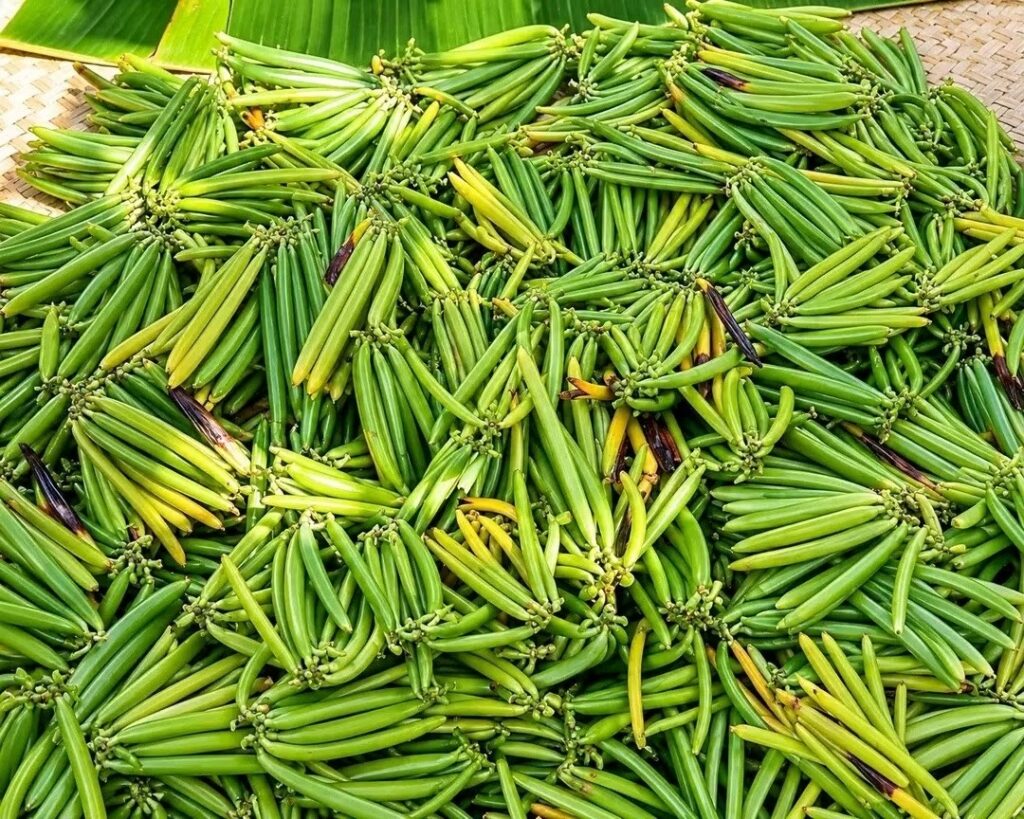
To understand the distress of vanilla farmers, we must first understand their work.
Vanilla production requires almost constant attention. Farmers must maintain the vines, clean their plots and monitor plant development.
Then comes flowering.
A vanilla flower remains open for only a short time. In Madagascar, pollination is generally done by hand. Farmers must therefore act at exactly the right moment, flower by flower.
After pollination comes a long period of waiting.
The beans develop over several months. During this period, farmers continue working. They maintain their plantations, monitor bean development and wait for the right stage of maturity.
In some producing areas, the risk of theft creates additional pressure.
Farmers may spend nights protecting a crop that represents a large part of their annual income.
So, when harvest season finally arrives, a farmer is not simply selling an agricultural commodity.
The farmer is selling the result of months of work and an entire year organised around the vanilla plantation.
When the price no longer reflects the effort
This is where the feeling of injustice begins.
When the price of green vanilla falls to a very low level, farmers do not simply see a number decreasing.
They see the value of their work collapsing.
Their family expenses, however, do not fall with the market price.
Food still has to be purchased.
Children still need to go to school.
Medical expenses still have to be paid.
Homes still need to be maintained.
And the next vanilla season still requires investment.
For many rural families, the vanilla harvest is one of the most important economic moments of the year.
A poor season can therefore affect an entire household for months.
The contradiction is painful.
The farmer may have worked successfully. The vines may have produced well. The harvest may be abundant.
Yet, at the moment when that work should finally generate income, the market may offer a price that feels disconnected from the effort invested.
A discouraged farmer represents a wider reality
The image of a farmer sitting among piles of green vanilla beans may appear simple.
It is not.
Around him lies the result of his work.
Yet his posture expresses discouragement.
This scene reflects the feelings of many farmers when prices fall sharply.
They worked.
They pollinated the flowers.
They maintained their vanilla plantations.
They waited through the growing period.
They protected their beans.
Then the moment to sell finally arrived.
And it is precisely at that moment that the value of their work seems to escape them.
The paradox is cruel:
A successful harvest can still become a source of sadness.
Producing more does not automatically mean earning more.
Without sufficient demand, stable markets and an efficiently organised supply chain, abundant production can place additional pressure on prices.
Farmers cannot be the only adjustment variable
When an industry faces a crisis, many actors are involved.
Farmers.
Collectors.
Vanilla curers and processors.
Exporters.
Importers.
Distributors.
Food manufacturers.
Public authorities.
Each depends, directly or indirectly, on the health of the same supply chain.
It would therefore be dangerous to believe that the solution is simply to ask farmers to accept increasingly lower prices.
In the short term, low prices may make purchasing easier.
In the long term, however, unsustainably low farmgate prices can weaken the entire industry.
A farmer who can no longer earn a viable income may reduce plantation maintenance.
Some may abandon their plots.
Others may harvest too early because they urgently need cash.
Eventually, quality itself can suffer.
A viable income for farmers is therefore not only a social issue. It is also an economic and strategic issue for the entire Madagascar vanilla industry.
Should some actors be pushed out of the vanilla industry?
During periods of crisis, one idea sometimes appears: reduce the number of actors.
Fewer farmers.
Fewer collectors.
Fewer processors.
Fewer exporters.
The logic may seem simple. If supply is too high, reducing the number of participants might appear to solve the problem.
But an agricultural industry cannot easily rebuild the knowledge and experience it loses.
An experienced farmer possesses valuable expertise.
A skilled vanilla curer understands a long and delicate transformation process.
An exporter develops international markets and builds relationships with buyers.
The real question should therefore not simply be:
Who should leave the industry?
A better question is:
How can Madagascar build a more competitive, better organised vanilla industry that sells more effectively on international markets?
Forcing thousands of actors out of the sector is not, by itself, a development strategy.
The priority should be to restore market opportunities and confidence.
The real challenge: rebuilding demand
The price of vanilla cannot be sustainably increased by administrative decisions alone.
A desired price can only remain viable when buyers are willing and able to purchase at that level.
The fundamental issue is therefore the market.
Madagascar must continue to protect the quality and reputation of its vanilla. But the country must also facilitate trade, strengthen confidence and improve competitiveness.
This requires several actions:
- better knowledge of available stocks;
- clear and predictable regulations;
- consistent product quality;
- effective action against practices that damage vanilla quality;
- stronger international promotion;
- more direct relationships with professional buyers;
- diversification of export markets;
- greater local processing and value creation.
The global market cannot be taken for granted.
Buyers have alternatives.
They can reduce purchases, reformulate products or source vanilla from other origins.
Madagascar vanilla has an exceptional reputation.
But reputation must be converted into real and sustainable demand.
The development of direct relationships between exporters and professional buyers can also help create more stable opportunities for Madagascar vanilla in bulk.
Creating more value in Madagascar
Madagascar should not only ask how much vanilla it can produce.
The country must also ask how much value it can create.
Whole vanilla beans will remain an essential product.
However, the industry can also develop more value-added products, including:
- vanilla powder;
- vanilla caviar or vanilla seeds;
- vanilla paste;
- vanilla extracts;
- ingredients designed for professional users;
- customised vanilla products for the food industry.
Diversification can create new commercial opportunities.
It can also help retain a greater share of added value within Madagascar.
The objective should not be to produce more without knowing where the additional volume will be sold.
The objective should be to produce better, process more effectively and sell more strategically.
Quality must remain at the heart of the solution
When prices are low, the temptation to reduce effort can become strong.
That would be a mistake.
Quality remains one of Madagascar’s greatest advantages.
Harvesting vanilla at the correct stage of maturity creates better conditions for producing high-quality cured beans.
Harvesting immature beans can have the opposite effect.
It can reduce quality and, over time, damage the reputation of the origin.
This is why harvest calendars and maturity remain important issues for the industry.
However, demanding quality from farmers also requires creating the economic conditions that allow them to produce it.
A farmer facing urgent financial pressure may be forced to sell quickly.
Quality and fair economic conditions should not be treated as opposing objectives. They must progress together.
Behind the price lies a question of dignity
Numbers are necessary.
But numbers do not tell the whole story.
One kilogram of green vanilla is not simply a commodity placed on a scale.
It represents hundreds of individual actions.
Flowers pollinated one by one.
Months of waiting.
Days spent working in the plantation.
Nights sometimes spent protecting the harvest.
Family plans postponed until the vanilla season.
This is why a sharp fall in prices is experienced so painfully.
Farmers are not simply asking the market to ignore economic reality.
They are asking for their work to retain value.
This situation also raises a broader question: how is the value of Madagascar vanilla distributed between its origin and the final consumer?
Understanding the difference between the value received at origin and the final retail price can help explain why the issue of value distribution remains central to discussions about the future of the sector.
The future of Madagascar vanilla must be built together
The current challenges will not be solved through permanent confrontation between actors.
The farmer is not the enemy of the collector.
The collector is not the enemy of the processor.
The processor is not the enemy of the exporter.
And the exporter cannot operate without buyers.
Everyone belongs to the same supply chain.
When one link collapses, the others are eventually affected.
The priority should therefore be to build an environment in which every legitimate actor can work, invest and progress.
This requires dialogue.
Transparency.
Consistent rules.
A genuine commercial strategy.
And, above all, a long-term vision.
The 2026–2027 green vanilla campaign should therefore be viewed as more than another harvest season.
It is an opportunity to ask a fundamental question:
What kind of future does Madagascar want to build for its vanilla industry?
Conclusion: we must not let hope disappear with the price
Today, some farmers look at their harvest with sadness.
That sadness should concern all of us.
Behind every basket of green vanilla lies almost a year of work.
Behind every farmer is a family.
And behind these families is an industry that supports entire communities across Madagascar’s vanilla-producing regions.
The solution is not to give up.
Nor is it to search for a single person or group to blame.
The solution is to rebuild.
Rebuild confidence.
Rebuild markets.
Strengthen quality.
Develop local processing.
Facilitate trade.
Create stronger connections with international buyers.
And ensure that the value created by vanilla better supports the people who make its production possible.
Madagascar vanilla still has a future. But that future cannot be built by forgetting the farmer.
At LA SAVEUR VANILLE, we believe that a sustainable vanilla industry begins with respect for the work carried out at origin.
Farmers, processors, exporters and international buyers share a common interest: preserving quality and building a stronger, more sustainable market.
Are you an importer, distributor or food professional looking for Madagascar vanilla? Contact LA SAVEUR VANILLE to discuss a supply solution adapted to your needs.